
MedCity News: It’s Time for the Tech Revolution to Come to Mental Health Diagnoses
MedCity News: It’s Time for the Tech Revolution to Come to Mental Health Diagnoses
The co-founder of Headlamp Health, Andrew Marshak, writes in healthcare publisher the MedCity News:
While breast cancer garners widespread attention, mental health awareness often lingers in the shadows when compared to other medical conditions. The two diseases stand at opposite ends of the spectrum of diagnosis, treatment and scientific understanding.
It’s time to take a page from advances in breast cancer diagnosis and care and apply it to mental illness. What do I mean by that? Well, thanks to advances in precision medicine, people who receive breast cancer diagnoses today have far more information about the kind of cancer they are facing and — with the help of tumor typing, genetic analysis and more — what treatments are likely to be most effective. Advances in diagnostics and therapeutics have improved outcomes for millions of people living with and fighting breast cancer.
Contrast this with how we diagnose mental illness today. Patients are often told they have “depression” or display symptoms consistent with “anxiety.” But these are broad and imprecise categories — and using such broad and vague terms would be unthinkable in other areas of medicine. More troublingly, prescribing effective medicines to treat these conditions is more art than science, and it often takes years of trial and error to find the right combination and dosage. This too is untenable. We need to take inspiration from the progress in oncology over the last few decades and challenge ourselves to adapt its successful playbook to mental illness. It’s time for precision psychiatry.
Tech, startups & the big picture
Subscribe for sharp takes on innovation, markets, and the forces shaping our future.
NEWS, BLOGS & ARTICLES
Let's keep in touch
We're heads down building & growing. Learn what's new and our latest updates.

Moneyball.ai and Eubrics bring AI solutions to labor-intensive workflows in investment banking and workforce performance.
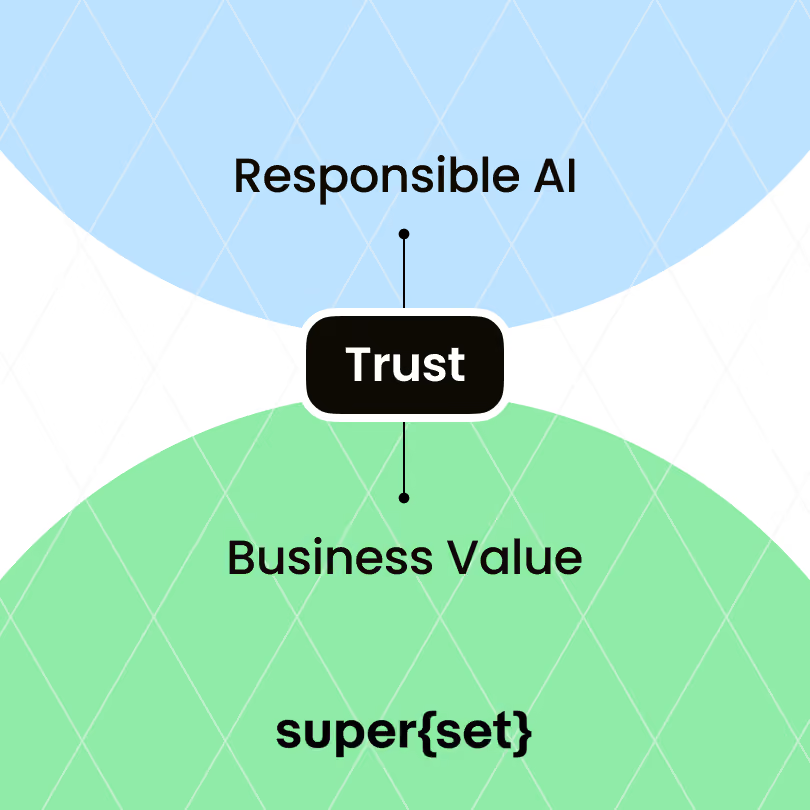
In a world filled with AI, trust is a distinct competitive advantage.
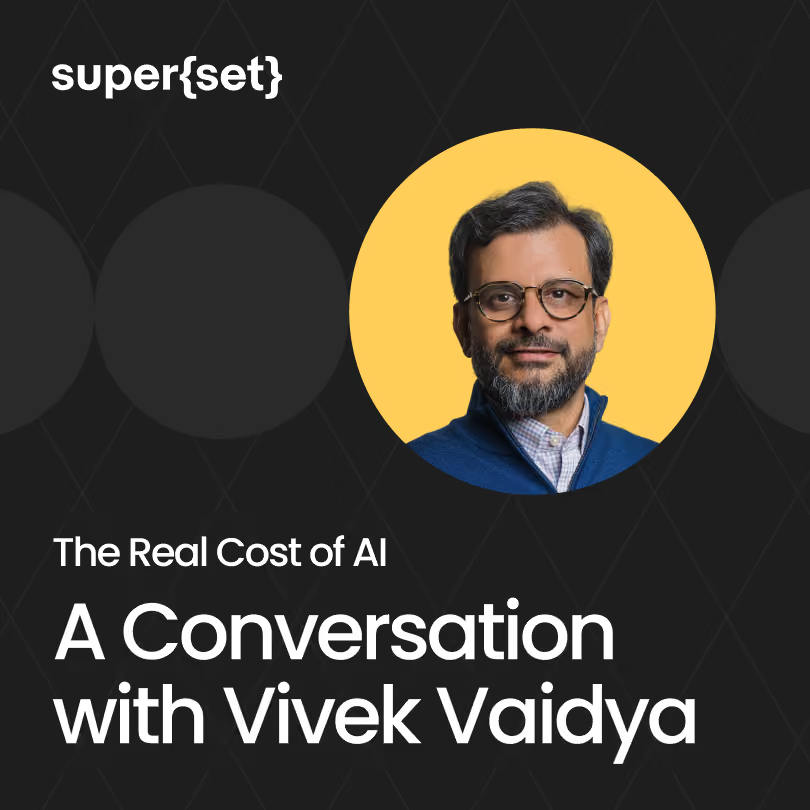
Vivek Vaidya of super{set} joins Nick to discuss AI Cost Structures and Pricing, Proprietary Data Sets That Create Moats, and a Clear Method for Determining Which Problem to Solve First.