.avif)
Software Is Supposed to Eat Your To-Do List, Not Add to It.
"Software today, if we're honest about it, is a bit crap."
That's super{set}'s General Partner Peter Day, in his recent keynote at New York's AI Agent Conference. The numbers back him up; according to a Harvard study on workplace behavior, the average knowledge worker toggles between applications 1,200 times a day.
First thing in the morning, you check Slack. An update takes you to HubSpot, then to Apollo, Apollo to Instantly, back to HubSpot, then to Gong, and finally back to Slack. You've opened 5 tools, context switched several times, just moving data back and forth. It's draining.
But remarkably, no one finds this unusual. Because it was built that way on purpose.
The System Worked as Designed
According to Peter Day, for the last twenty years, the two best pieces of advice you could give a software founder were to: go deep, not wide, and "it only matters when someone buys something." Going deep meant picking a narrow problem and solving it better than anyone else. Only caring when someone buys something meant optimizing your product for the people who held the purchase order; IT, procurement, or the CFOs office.
After two decades of following those approaches, we arrive at today's software landscape. Within every business use-case, there exists hundreds of top tier point solutions, each excellent at satisfying one piece of the workflow. They were made for procurement, configured by admins, and endured by users.
Just look at the typical tools needed for MarTech. Smart Insights reports 30 separate categories of software for specific marketing functions. That’s 30 tools just to run one business function.
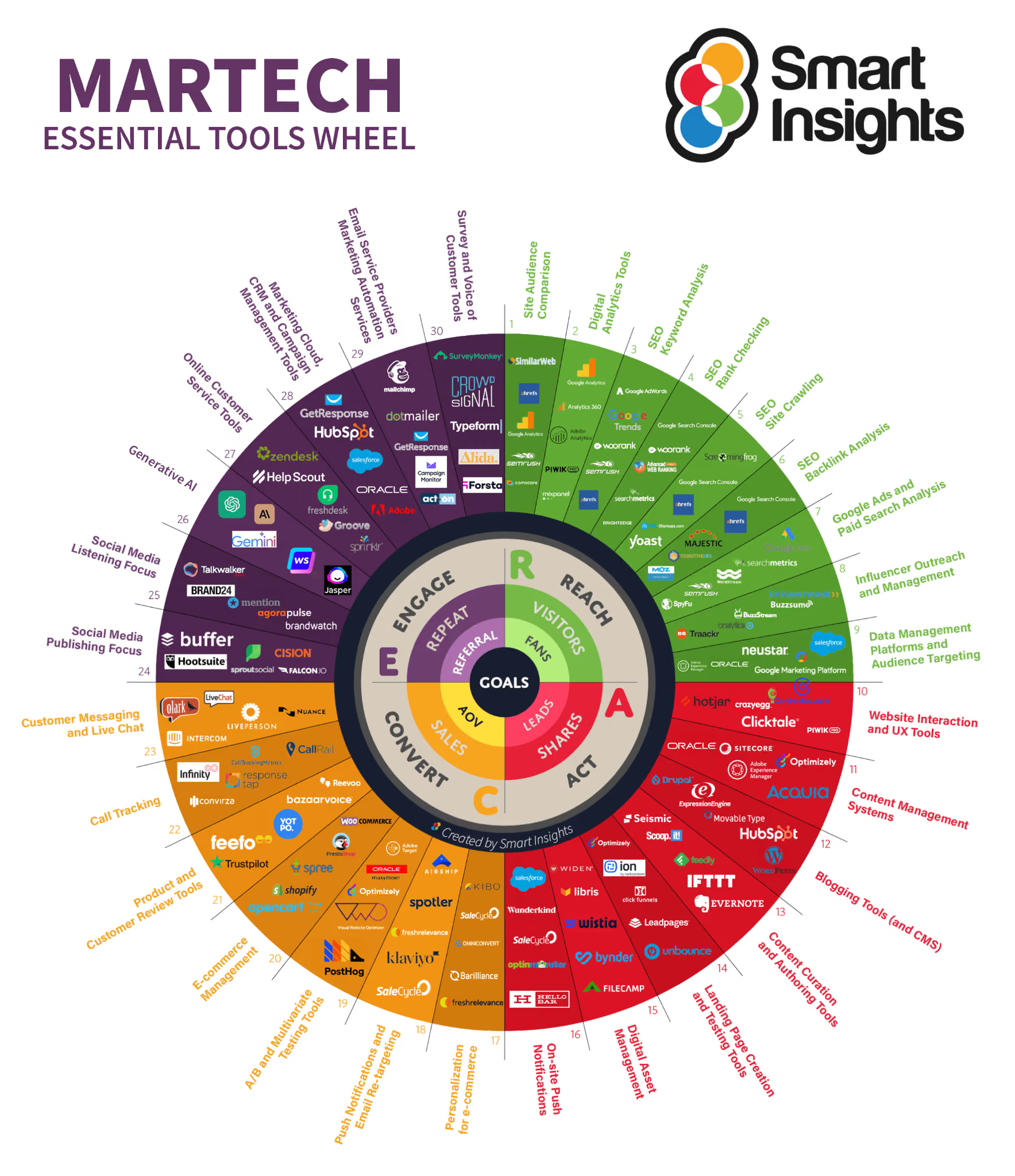
So who connects the slices? You do. Humans became what Peter Day calls the warm-blooded integration layer: taking an alert in one tool, executing a task in a second, distributing it to team-members in a third, and reporting in a fourth.
And here's what the executive buyer and procurement teams don't see: people stop using the tools. Sales reps stop updating the CRM. Task-generating software doesn't just burden users. It often leads to burn-out and worst-case, low productivity which impacts the bottom line.
Task-Generating vs. Task-Absorbing Software
A year or so back, super{set} started to ask a different question: what if software could absorb tasks instead of creating them?
Task-Generating software creates work. It alerts, prompts, feeds statistics, requests input, and waits for you to act. One clear example is how this runs the art of sales. According to the Salesforce State of Sales report, a great SDR will spend only ~30% of their time actually selling. The other 70% goes to CRM updates, account research, administrative work.
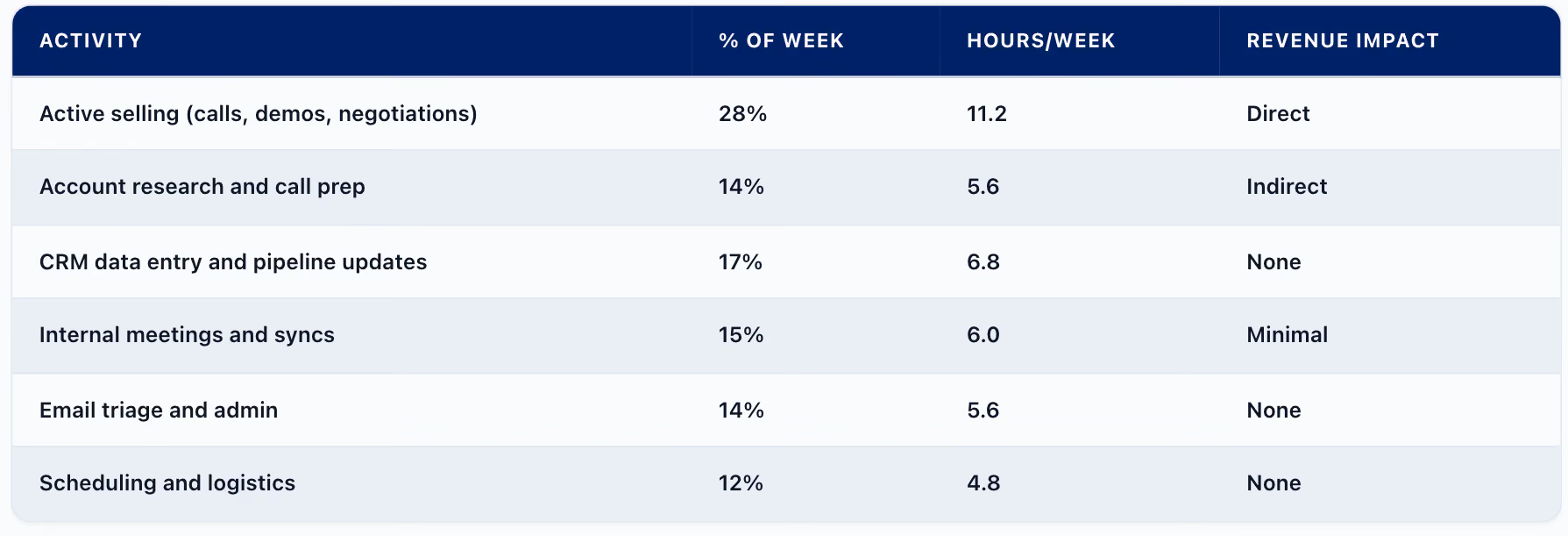
Task-Absorbing software reduces (and in some cases removes) work. It acts instead of alerting, it completes tasks instead of creating them. For that same great SDR, that means software which takes notes on their calls, updates their CRM, and handles lead gen — so all they have to worry about is what they do best, getting quality meetings.
What the Shift Actually Requires
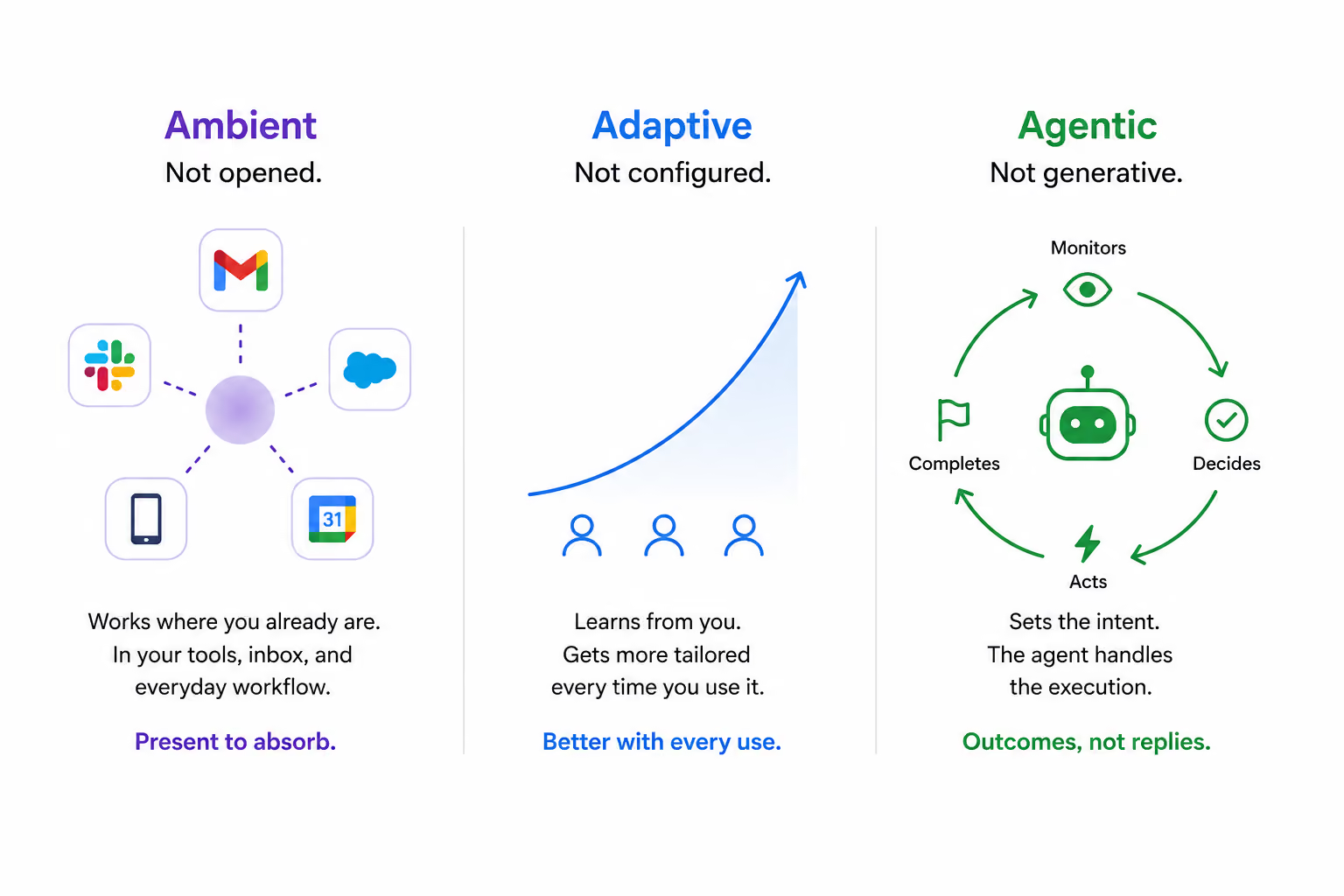
Absorbing tasks rather than generating them requires 3 fundamental shifts in how product is designed and built:
Ambient, not opened. Task absorbing software can't be boxed exclusively in its own interface. To absorb work, software has to be present where the work is already happening.
Adaptive, not configured. Peter Day claims that traditional SaaS degrades as it scales. By your 200th customer, navigating and onboarding your software requires a consultancy. Task-absorbing software inverts this curve. Like a tailored social media feed, it gets better the more you use it because it's learning your usage behavior.
Agentic, not generative. The major unlock that allows software to finish tasks for you is AI. But that AI can't be stuck in a chatbox, waiting on you to query it. That’s just another task-generating tool. Truly agentic software monitors your work environment, analyzes what to do, and actually does it. You set the intent, it handles the execution.
Key Takeaways (TLDR)
The last era of software featured a cacophony of point solutions, where each employee acted as the warm-blooded integration layer that brought them together. The next era will be defined by software people love. The more it's adopted, the more it learns; continuously improving with no custom config.
Over the next 5 years, this flywheel points towards winner-takes-most.
So the question worth asking about any new software product is no longer "what does it do?". It's rather "what tasks is it taking off my plate?".
These questions will point at two very different companies. super{set} is betting on the latter.
Rayyan's Thoughts
I asked the very last question of Peter Day's talk: if the winners are going to win so big, with companies that run so lean, what happens to the losers – everyone else?
The room laughed. One of the founders I most admire came to me after, and told me straight: "Every single night, I'm so scared of failing I can barely sleep. That's the risk I take, because when I win, it will have changed the world."
Right now is the single best time to create software people love. I'm deeply excited to be surrounded by the next generation of software — tools that absorb work, not create it.
Tech, startups & the big picture
Subscribe for sharp takes on innovation, markets, and the forces shaping our future.
Let's keep in touch
We're heads down building & growing. Learn what's new and our latest updates.