
VM Blog Exclusive Interview with Vivek Vaidya, founding General Partner, super{set}
VM Blog Exclusive Interview with Vivek Vaidya
This VMblog Q&A with super{set} founding GP Vivek Vaidya explains how the studio builds AI-native enterprise companies by pairing capital with hands-on company building (engineering, GTM playbooks) and focusing on proprietary data as the core moat. It spotlights the $200M acquisition of Habu by LiveRamp (2024) as proof of the model, and details what they seek in technical co-founders, how they hard-wire governance/privacy from day one, and which enterprise workflows are ripe for AI over 2025–2030.
Why it’s worth a read: Clear, practical playbooks on how to compress zero-to-one, build data flywheels, run enterprise GTM with design partners, and avoid “model-first” traps. A useful read for founders and operators, not just investors.
To read full Q&A article, go to VM Blog.
Tech, startups & the big picture
Subscribe for sharp takes on innovation, markets, and the forces shaping our future.
NEWS, BLOGS & ARTICLES
Let's keep in touch
We're heads down building & growing. Learn what's new and our latest updates.
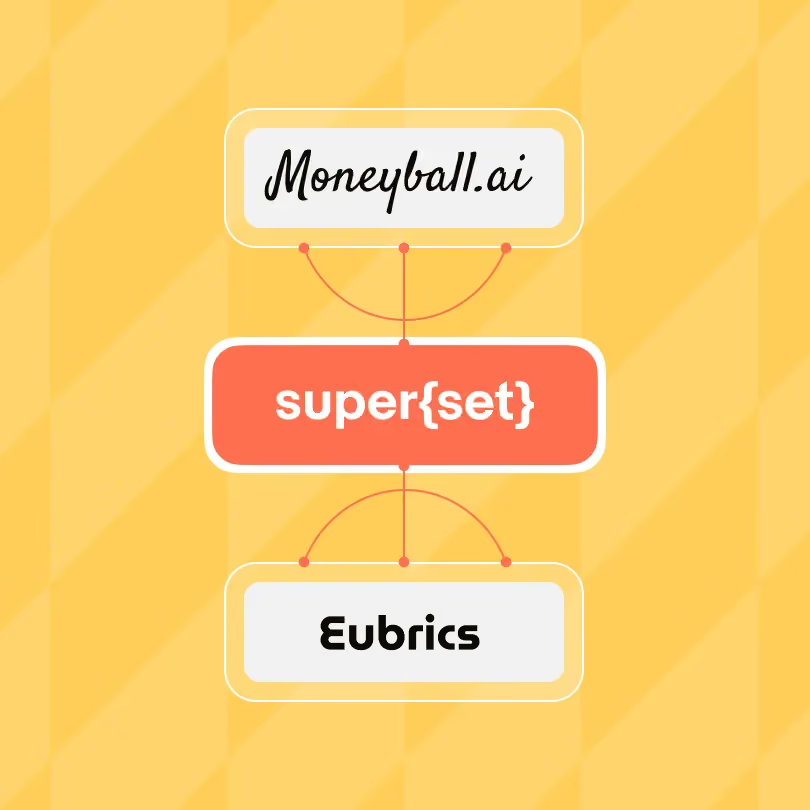
Moneyball.ai and Eubrics bring AI solutions to labor-intensive workflows in investment banking and workforce performance.
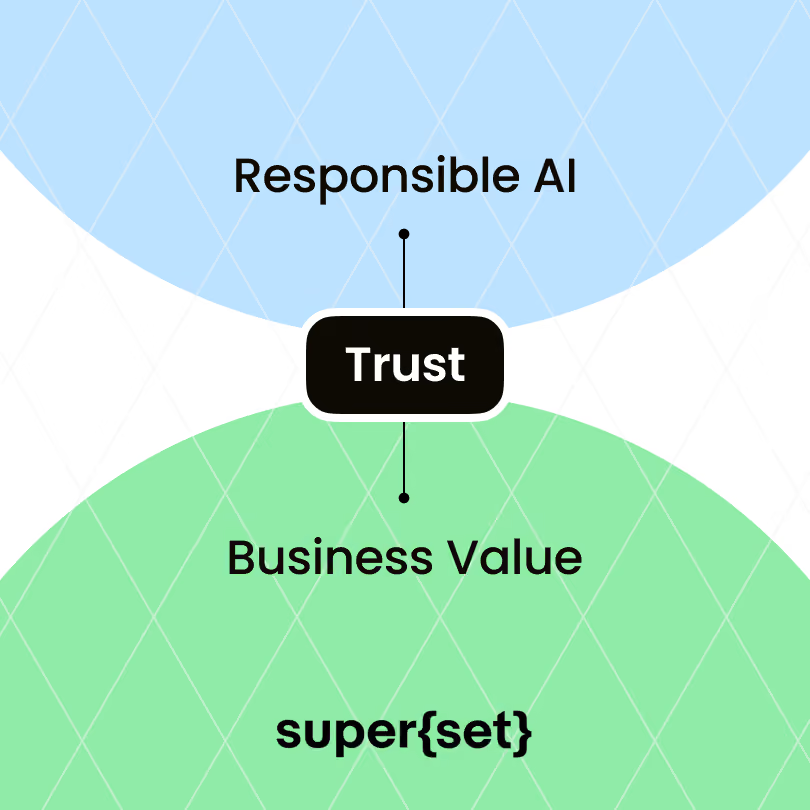
In a world filled with AI, trust is a distinct competitive advantage.

Vivek Vaidya of super{set} joins Nick to discuss AI Cost Structures and Pricing, Proprietary Data Sets That Create Moats, and a Clear Method for Determining Which Problem to Solve First.